
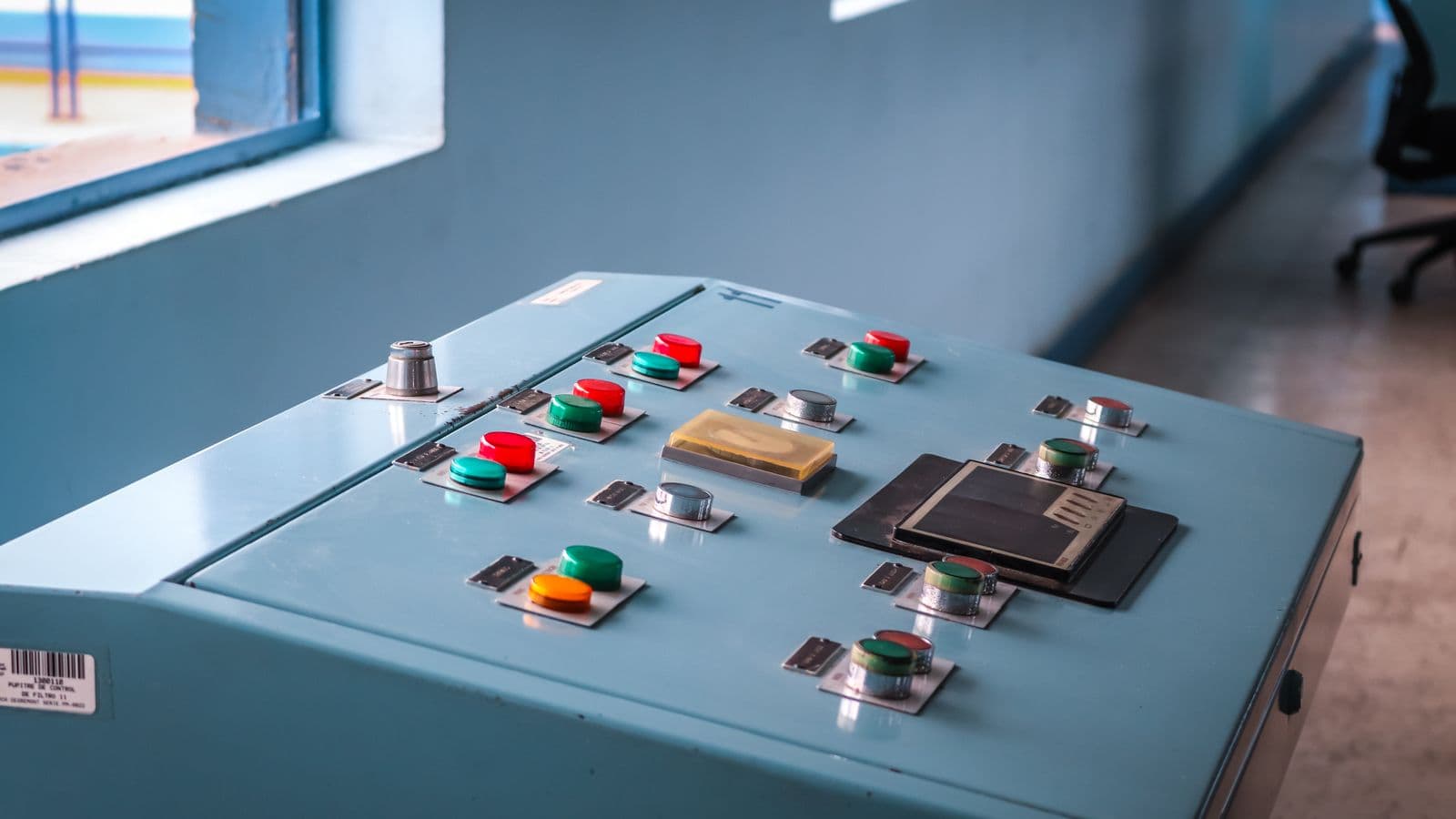
Once the door of a low-voltage panel is closed, nobody looks inside during day-to-day operation, until a fault, a fire, or an audit forces the question. And the question that follows is always the same: what standard was this panel built to, and where's the paperwork that proves it? TS EN 61439-1 is the foundational standard governing the design, manufacture, and verification of low-voltage switchgear and controlgear assemblies, LV panels. For a facility manufacturing in one of Bursa's organized industrial zones, compliance with this standard isn't a paperwork formality; it's the thing standing between the business and a denied insurance claim, a failed audit, or a workplace-accident liability case. This article covers what the standard actually requires, why it matters at an engineering level, and what non-compliant panels typically get wrong.
What TS EN 61439-1 Actually Covers
TS EN 61439-1 is the general framework standard for low-voltage switchgear and controlgear assemblies, applied together with product-family standards such as TS EN 61439-2. Its core purpose is to verify that a panel will behave safely and predictably from design through to field installation. It does this through two mechanisms: design verification and routine verification. Design verification proves, through calculation, testing, or comparison, that the panel's fundamental construction, enclosure, busbar system, connections, meets the standard. Routine verification defines the checks that must be performed on every single panel coming off the production line. This distinction matters: a "type-tested" design doesn't automatically mean every unit built to it is safe, without routine testing, that assurance is incomplete.
Type-Tested vs. Partially Type-Tested, Why the Old Distinction Disappeared
Under the older TS EN 60439 series, there was a formal split between "type-tested" (TTA) and "partially type-tested" (PTTA) assemblies. TS EN 61439-1 removed that binary and instead allows verification through one of three methods: testing, calculation, or compliance with design rules. In practice, this means the manufacturer doesn't have to physically test every panel in a lab, but there can be no undocumented deviation from the reference design (enclosure, busbar system, component combinations). When a configuration differs from the reference design, a different busbar cross-section, a different enclosure manufacturer, verification must either be redone or supported by calculation. This is exactly where many smaller workshops in Bursa go wrong: taking one enclosure brand's type-test report and "adapting" it to a completely different panel fitted with different components.
Thermal Performance Verification
Every device, cable, and busbar inside a panel generates heat, and whether that heat escapes the enclosure without accumulating is decisive for the panel's lifespan and safety. TS EN 61439-1 requires verification that temperature rise at rated current stays within defined limits, done either through direct thermal testing or via the standard's calculation methods. Insufficient ventilation, cramped component layout, or incorrectly sized cabling create local hot spots inside the enclosure; over time these age insulation material, raise contact resistance, and can eventually lead to thermal runaway. In high-density equipment such as MCC panels and power-factor correction panels, thermal verification becomes especially critical.
Short-Circuit Withstand
The single most critical moment for a panel isn't normal operation, it's the instant a short-circuit fault occurs inside it. TS EN 61439-1 requires verification of the panel's rated short-time withstand current (Icw) and peak withstand current (Ipk). This verification proves the busbars won't mechanically collide, enclosure doors won't blow open, and connection points won't loosen under short-circuit forces. This calculation ties directly to the short-circuit calculation performed earlier in the project, without knowing the available fault power from the grid, a panel cannot be ordered with the correct Icw rating. A panel with a low Icw rating connected to a grid with high fault power can physically fracture during a fault event, a direct injury risk to anyone on site.
Protection Class and IP Rating
The environment a panel sits in, dust, humidity, chemical vapor, outdoor exposure, determines the required IP rating. Under TS EN 61439-1, the panel's IP rating is verified against the value declared by the enclosure manufacturer, either through testing or documentation. Installing an IP2X-rated panel in a dust-heavy textile production floor quickly leads to dust accumulation on contact surfaces and failure; in chemical processing facilities, an enclosure not resistant to corrosive vapors can lose structural integrity within a few years. IP rating selection should be an engineering decision based on actual site conditions, not a "higher is always better" default, an unnecessarily high IP rating raises cost and complicates maintenance access.
Clearance and Creepage Distances
The air gap (clearance) and surface tracking distance (creepage) between conductive parts at different potentials form the basis of a panel's insulation coordination. These distances are set according to the panel's rated insulation voltage, pollution degree, and material group, referencing the IEC 60664-1 tables that TS EN 61439-1 points to. Insufficient clearance risks flashover under transient overvoltages (switching surges, lightning impulses); insufficient creepage allows moisture and contamination buildup to cause surface tracking and eventual arcing over time. These distances are calculated at the design stage and must be physically preserved during manufacturing, a cable duct or mounting rail added later can silently encroach on them.
Segregation (Form) Classes
The segregation forms referenced by TS EN 61439-1 define how much separation exists between different functional units within a panel, busbar, incoming, and outgoing circuits, ranging from Form 1 to Form 4 in increasing levels of separation. Form 1 has no internal segregation; Form 4 fully separates each outgoing circuit from both the busbar and other outgoing circuits. In a facility on an OIZ that requires continuous production, a higher form level lets maintenance be performed on one outgoing circuit while others stay energized, improving personnel safety and preventing a fault on one circuit from propagating to others. Form selection should be settled at the design stage in line with the facility's maintenance strategy and downtime tolerance.
Routine Verification: Checks Required on Every Panel
Even though design verification happens once, TS EN 61439-1 requires every panel coming off the line to pass routine verification. These checks include correctness of wiring and electrical connections, insulation resistance measurement, continuity of the protective conductor, and functional operation testing. Routine verification catches assembly-line errors, a loose connection, a reversed phase, a missing ground, before the panel ever reaches the field. More detail on the scope and importance of this step is in our panel testing and labelling article.
Why It's Critical for Insurance and Audits
In the investigation following a workplace accident or fire, one of the first documents requested is the panel's declaration of conformity and its test reports. A panel that wasn't manufactured to TS EN 61439-1, or whose compliance can't be documented, can lead an insurer to deny a claim, or expose the employer to administrative and criminal liability under Law No. 6331 on Occupational Health and Safety. Panel conformity documentation is also a standard request during OIZ inspections and periodic electrical installation audits. Compliance is therefore not just a technical preference, it's an integral part of the business's legal and financial risk management. Our LV panel installation service covers this documentation process end to end.
Common Gaps Found in Non-Compliant Panels
A few recurring patterns show up in the non-compliant panels we encounter on site:
- Busbar cross-section not calculated against short-circuit current, bars that look adequate visually but were selected without a mechanical withstand calculation.
- IP rating mismatched to the environment, indoor-type enclosures used outdoors or in dusty environments.
- Missing labelling and single-line diagram, no clear record of which circuit goes where, raising the risk of isolating the wrong circuit during maintenance.
- No routine test records kept, panels handed over without documented insulation resistance and continuity test results.
- Segregation class mismatched to operational needs, low form levels forcing full panel shutdown for maintenance that should have been isolatable.
Common Mistakes
- Adapting a type-test report to a different configuration: Changing the enclosure, busbar, or component combination invalidates the reference design's original verification, requiring re-verification.
- Skipping the thermal calculation: In densely packed panels, there may be no visible issue at first, but hot-spot accumulation causes failure over the long run.
- Cutting the IP rating to save cost: It looks like a short-term saving, but a protection class mismatched to the environment causes early failure and voids warranty coverage.
- Skipping routine verification because "there's already a type test": Type testing doesn't catch individual assembly errors introduced during series production.
FAQ
What's the difference between TS EN 61439-1 and TS EN 61439-2? TS EN 61439-1 defines the general rules applicable to the entire family of LV panels; TS EN 61439-2 adds product-specific requirements for power switchgear and controlgear assemblies. They apply together, TS EN 61439-1 alone isn't sufficient.
Does every panel require laboratory testing? No. The standard allows verification through testing, calculation, or compliance with design rules. As long as there's no deviation from the reference design, previously completed type-test results can be reused; if there is a deviation, that specific part requires re-verification.
Who issues the Declaration of Conformity? The party that manufactures or performs the final assembly of the panel (the original equipment manufacturer or panel builder) issues the declaration of conformity, documenting which standard the panel was built to and which verification methods were used.
Can an old panel be retrofitted to meet TS EN 61439-1? If the panel's fundamental construction, enclosure, busbar, clearances, can't be modified, achieving full compliance can be difficult; however, gaps like labelling, protection coordination, and test reports can be substantially improved. Where structural inadequacy is severe, replacement should be considered, see our panel replacement timing article.
How is short-circuit withstand (Icw) determined? The available fault power along the line from the grid to the panel is calculated (per IEC 60909-0:2016 methodology), and the panel's Icw and Ipk ratings are selected against that value. A panel ordered without this calculation may not withstand the actual fault power present on site.
Are there extra requirements for MCC panels? Yes, beyond the general TS EN 61439-1 rules, motor control centers require coordination specific to motor circuits (Type 1/Type 2 coordination between short-circuit protection and the contactor/overload relay). See our MCC panel article for detail.
Who inspects panels in Bursa's OIZs? Periodic electrical installation inspections are generally carried out by authorized inspection bodies or EMO-registered electrical engineers; OIZ administrations may also request additional inspection within their own zones.
What does a non-compliant panel actually cost? The direct cost is repair and production loss after a failure; the indirect cost is a denied insurance claim, workplace-accident liability, and delays during OIZ or audit processes, and these indirect costs are usually far higher than the difference in upfront investment.
Compliance with TS EN 61439-1 is the first question to ask when purchasing a panel, because every clause the standard covers has a direct bearing on the facility's safety and legal standing. If you're not certain your panel is compliant, reviewing the existing documentation is almost always far cheaper than fixing it after the fact.
Let's talk through this together
The SOREAS engineering team can assess what's covered here for your specific facility. Reach out via the contact form or call us directly.