
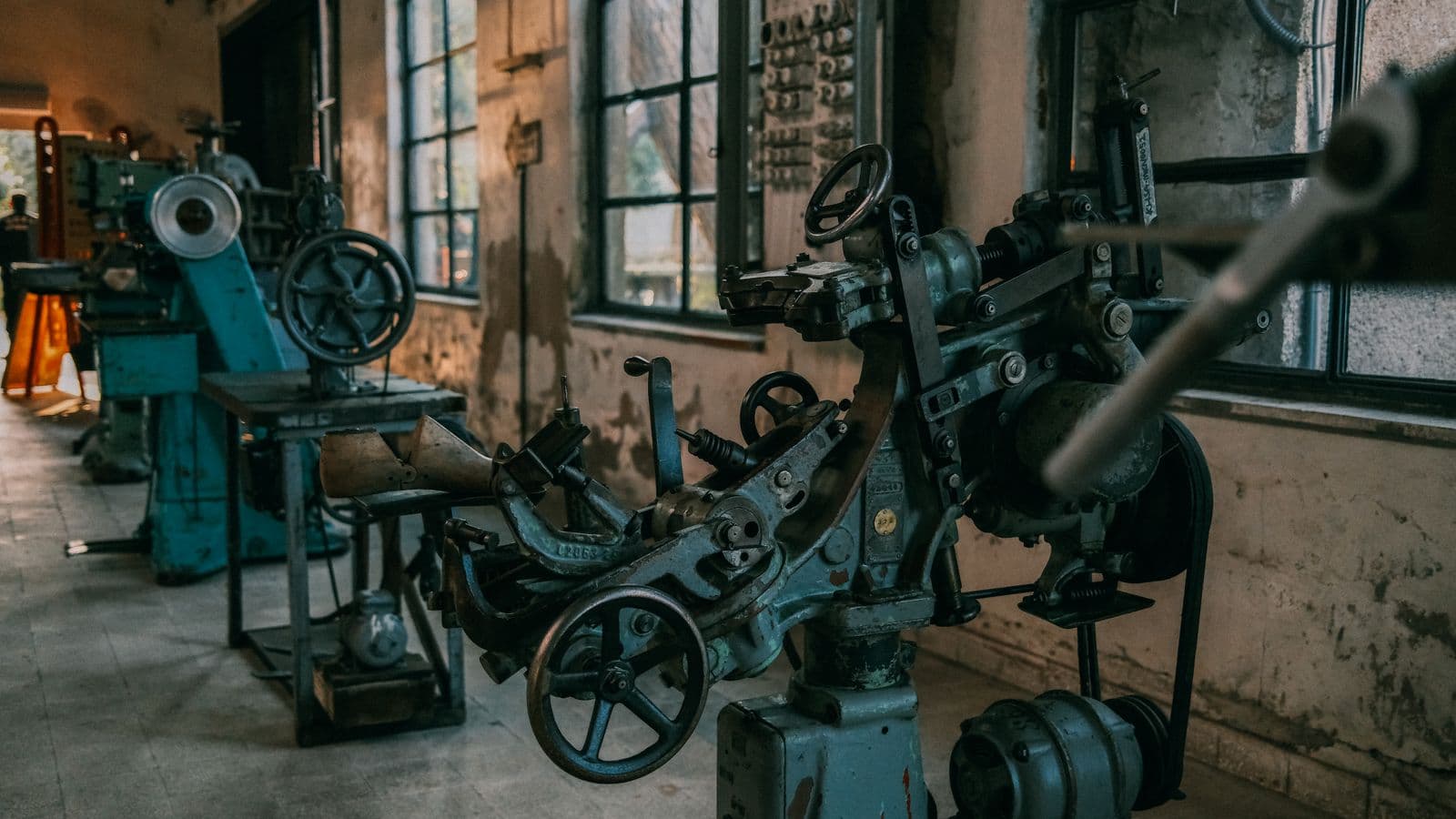
Replacing a mechanically sound machine that's run reliably for fifteen or twenty years, simply because it's "old technology," is usually an unnecessary capital expense. The real problem is rarely the machine itself, it's that the machine produces no data, can't be monitored remotely, and can't integrate into a modern line. Retrofit, adding an automation, sensor, and measurement layer to an existing machine, closes that gap without wasting the machine's remaining mechanical life. This piece covers which machines are good retrofit candidates, typical integration scope, the technical challenges you'll actually run into, and how the cost compares against full replacement.
What Is Retrofit, and When Does It Make Sense?
Retrofit means modernizing a machine's control and monitoring layer while keeping its mechanical body and core function intact. This typically includes: adding or upgrading a PLC, adding sensors (position, temperature, vibration, current), installing an energy measurement device, and feeding that data into SCADA or a cloud-based dashboard.
Retrofit typically makes sense when:
- The machine is mechanically sound, but the control system (relay logic, an old PLC, analog gauges) is falling short.
- Production data (counts, downtime, fault logs) isn't captured at all, or is captured by hand.
- Energy consumption isn't visible, nobody knows which machine is consuming how much.
- The machine can't communicate with other modern equipment on the line, which drags down the automation level of the whole line.
- Spare parts are still available and the mechanical components (motor, gearbox, chassis) have significant remaining life.
Where retrofit does NOT make sense is equally clear: if mechanical wear is advanced, if the machine is structurally non-compliant with safety standards, or if production capacity itself is insufficient, in those cases, renewing the control layer doesn't solve the underlying problem.
Typical Retrofit Scope
A retrofit project can go to different depths depending on the facility's need:
- Basic monitoring retrofit: just an energy analyzer and a few status sensors (running/stopped, fault) are added to the machine; data feeds into SCADA. This is the lowest-cost tier and barely touches production.
- Control-layer retrofit: relay logic or an old PLC is replaced with a modern PLC; the existing power circuit (contactors, motor protection) is retained. Sequencing and interlock logic moves into software, a topic we cover in depth in our PLC programming guide.
- Full integration retrofit: the control layer is renewed, the sensor set is expanded (condition-monitoring sensors like vibration, temperature, current signature are added), and the machine is fully integrated into SCADA and becomes remotely monitorable.
- HMI addition: a touch HMI panel is added to simplify the operator's interaction with the machine, this especially reduces training time and operator error on older machines.
Most projects start with low-cost basic monitoring and expand scope as the data's value becomes visible on the floor.
Sensor and Measurement Integration
The most common first step in retrofit is adding external sensors to a machine, without touching its own internal control circuit:
- Current measurement (clamp-on CT): current transformers clamped onto the motor feed cable measure the current the machine draws, indirectly revealing load state and early fault signs.
- Vibration sensors: mounted on the motor and gearbox housing to catch bearing and gear wear early.
- Temperature sensors: monitor motor winding, bearing, or hydraulic oil temperature to give an early warning of overheating.
- Position and status sensors (limit switches, proximity sensors): used to detect from outside which state the machine is in, running, stopped, faulted.
- Energy analyzers: measurement devices added to the panel log the machine's real-time and historical energy consumption.
The common thread across these sensors is that most can be added externally, without modifying the machine's original control circuit, which is what makes retrofit low-risk and quick to deploy.
Challenges in Integrating with Legacy Equipment
Retrofit projects carry different challenges than a from-scratch installation:
- Communication protocol mismatch: most older machines don't support modern Ethernet-based protocols. In that case a protocol converter (gateway) is needed, a device that translates an old serial output into Modbus TCP, for example.
- Missing documentation: machines that have changed hands over the years, with the original schematic long lost, often require reverse-engineering the existing wiring and control logic. This is the most common challenge that extends project timelines.
- Spare parts and module availability: a very old PLC or drive's manufacturer may no longer produce it; in that case a full upgrade can make more sense than a partial retrofit.
- Mechanical-electrical compatibility: newly added sensors need to withstand the machine's existing mechanical tolerances (vibration, temperature, humidity); a sensor not designed for industrial environments will fail quickly.
- Outage window constraints: retrofit work has to fit into planned maintenance windows in a facility that runs without stopping, which forces scope to be planned in phases.
- Preserving safety interlocks: existing safety circuits (emergency stop, door interlocks) must not be broken during retrofit, and should carry over to the new control layer verifiably.
Retrofit Process, Step by Step
- Site assessment and inventory: the machine's existing control architecture, wiring condition, and sensor/actuator inventory are documented, reconstructed through field measurement where documentation is missing.
- Scope and goal definition: what the facility actually wants to solve is clarified, is it just energy visibility, full automation integration, or a complete control-layer renewal?
- Hardware selection: sensors, a PLC/gateway if needed, and communication modules are selected; the design is sized to physically fit the existing panel.
- Installation: sensors and control hardware are mounted during a planned outage window; the existing power circuit is touched as little as possible.
- Communication and integration: newly added data points are connected to the existing or newly deployed SCADA system.
- Testing and verification: field verification that measurements read correctly and alarms trigger correctly under normal operating conditions.
- Commissioning and training: operators and maintenance staff are trained on the new monitoring screens and fault-response process.
Retrofit vs. Full Machine Replacement
The decision usually comes down to three factors: remaining mechanical life, cost, and risk of production loss.
- Cost: retrofit is typically a small fraction of a new machine's cost, because the mechanical body, motor, gearbox, the expensive components, are retained, and only the control and monitoring layer is renewed.
- Downtime: full machine replacement causes production loss measured in days, sometimes weeks, through the disassembly-installation-commissioning process. Retrofit, planned in phases, reduces this to hours or a few days.
- Wasted mechanical life: replacing a machine that still has 10-15 years of mechanical life left, just because the control system is old, is a waste of capital.
- When full replacement makes more sense: if mechanical wear is advanced, if production capacity is already insufficient, or if spare parts availability for a critical component has dropped near zero, renewal can be more economical than retrofit.
A practical rule of thumb: if the control-system renewal cost is under 20% of a new machine's cost and remaining mechanical life is adequate, retrofit is almost always the more sensible choice.
This decision shouldn't rest on the initial investment figure alone, total cost of ownership matters more. Full replacement brings in additional line items: shipping and installing the new machine, operator retraining, and disposing of the old one, which typically add a meaningful amount on top of the initial quote. With retrofit, most of these extra items disappear, because the machine stays in place. Calculating retrofit's payback period against energy savings, reduced downtime, and lower maintenance cost is the most concrete way to ground the investment decision.
Which Industries Use Retrofit Most Often?
Across facilities in Bursa's 17 organized industrial zones, retrofit demand concentrates particularly in these sectors:
- Textiles and apparel: older weaving, dyeing, and finishing machines are usually mechanically sound but their control panels are nothing but analog gauges; adding energy metering and downtime tracking pays back quickly.
- Metalworking and machining: adding position and vibration sensors to older, non-CNC equipment provides an early warning ahead of failure.
- Food and packaging: adding counters and downtime tracking to older filling and packaging lines makes OEE (overall equipment effectiveness) calculation possible.
- Plastic injection molding: injection machines' energy consumption is typically high; energy analyzers added through retrofit make per-cycle consumption visible for process optimization.
What these sectors share is production equipment with a long mechanical life, but a control/monitoring layer that falls short for production efficiency, exactly what retrofit solves.
What You Gain After Retrofit
- Visibility: a machine that was previously a "black box" now has measurable energy consumption, runtime, and fault history.
- Predictive maintenance capability: vibration and temperature trend data allows intervention before a failure occurs.
- Line-wide integration: the older machine can now be monitored on the same SCADA panel as other modern equipment on the line, simplifying line-wide coordination.
- Energy cost visibility: per-machine consumption data directly supports detecting losses like idle consumption and inefficiency, as covered in our energy monitoring guide.
- Extended economic life: a mechanically sound machine can stay productive for several more years with a modern control and monitoring layer.
Common Mistakes
- Oversizing scope from day one: trying to bring an entire machine to full-integration level in one shot complicates the project and extends downtime. A phased approach is usually safer.
- Starting retrofit without assessing mechanical condition: adding a control layer to a machine with advanced mechanical wear can require reinvestment shortly after.
- Ignoring industrial durability in sensor selection: consumer/office-grade sensors failing quickly in an industrial environment is a common mistake.
- Leaving safety interlocks out of scope: failing to verify existing safety circuits while renewing the control layer can create a serious safety gap.
- Leaving documentation unupdated: without an updated schematic and I/O list, the next intervention has to start discovery from scratch again.
- Assuming a communication protocol without testing it: planning around an unverified assumption about an old device's protocol leads to surprise delays during installation.
FAQ
Is every machine a good candidate for retrofit? No. Machines with heavy mechanical wear, structural safety issues, or already-insufficient production capacity are better candidates for replacement. A site assessment clarifies this.
How much does retrofit stop production? It depends on scope and complexity; a basic monitoring retrofit can be completed in a few hours, while a full control-layer renewal can take a day or two within a planned outage window.
Can we just collect data without replacing an old PLC? In most cases, yes, if the old PLC has a communication output, data can be fed into SCADA through a gateway. With no communication output at all, external sensors can provide indirect measurement.
How does retrofit cost typically compare to a new machine? It varies with scope and condition, but basic monitoring and control-layer retrofit is generally a small fraction of a new machine's cost, far below full replacement.
Are there warranty or insurance implications after retrofit? Usually not, if retrofit happens outside the manufacturer's warranty period; what matters is that safety interlocks stay compliant with relevant standards and are properly documented.
Which sensors should be added first? Energy analyzers and basic status sensors (running/stopped, fault) are usually recommended first, since they deliver the highest value at the lowest cost; vibration and temperature sensors can follow in a second phase.
How does the retrofitted machine connect to SCADA? Newly added sensors and control hardware connect to the existing or newly deployed SCADA system over standard protocols (Modbus, Ethernet/IP), a process detailed in our SCADA installation guide.
What standards apply to retrofit work? Added electrical hardware and panel modifications should be evaluated under TS EN 61439-1, cable sizing should follow TS HD 60364-5-52, and safety interlocks must stay compliant with relevant machine-safety requirements and Turkey's Law No. 6331.
Retrofit extends a mechanically sound machine's economic life while giving the facility all the visibility and efficiency advantages of modern automation. With the right scope and a phased approach, similar operational gains can be achieved at a fraction of full replacement's cost.
Let's talk through this together
The SOREAS engineering team can assess what's covered here for your specific facility. Reach out via the contact form or call us directly.