
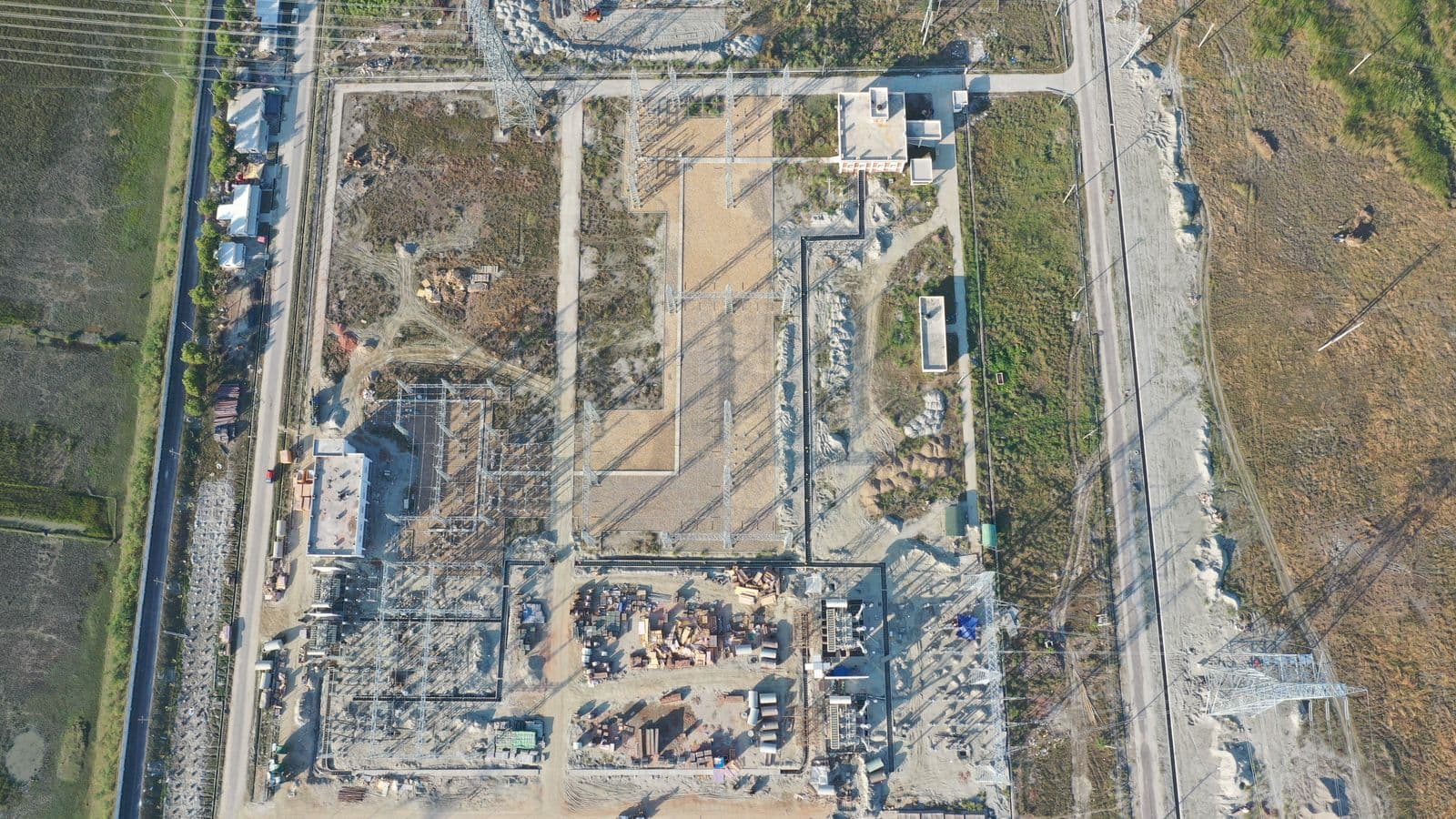
A new factory or a capacity increase often means building your own substation. A well-designed substation is the foundation of a safe, efficient and audit-ready facility, and the process involves considerably more engineering calculation and official procedure than it appears at first glance.
When Do You Need a Substation?
Once a facility's power demand exceeds what the utility can supply at low voltage, medium-voltage supply, and building your own substation, becomes mandatory. This threshold is crossed often, whether setting up a new factory on an OIZ plot or expanding capacity at an existing one. Substation need should be assessed at the feasibility stage alongside both current and planned load, a transformer that turns out undersized later directly caps production growth.
1. Right Power & Transformer Selection
Transformer rating is set against current and future load, a transformer sized only for today's need can become a bottleneck within a few years. Power-transformer selection follows IEC 60076-1:2011, rated power, vector group (e.g. Dyn11), short-circuit impedance and cooling type (ONAN). Oil vs. dry-type depends on fire safety, location (indoor/outdoor) and maintenance conditions, in densely built OIZ plots, fire regulation often favors dry-type transformers.
2. MV Switchgear Selection
On the medium-voltage side, metal-clad or RMU cells are chosen by load profile and expansion plan. Incomer, metering, protection and transformer-feeder cells form the backbone of the system. Cell selection should account not just for today's feeder count but future expansion (an additional transformer, additional feeders), adding cells later is far more expensive than leaving room from the start.
3. Short-Circuit & Protection Coordination
For provisional-acceptance files, a short-circuit calculation is mandatory in most OIZs. We calculate it per IEC 60909-0:2016 and set breaker/fuse selection through protection coordination on a selectivity basis. Without correct coordination, a fault at a lower level can needlessly trip an upstream protection device too, making it harder to locate the fault and causing an unnecessary wider outage.
4. Installation & Commissioning
We install the kiosk (prefabricated) or building-type substation and commission it safely with test protocols. This stage includes:
- Mechanical installation and cabling of the transformer and MV cells
- Insulation-resistance and continuity testing
- Protection-relay setting and function tests
- Earthing measurement and reporting, see our earthing measurement guide
- A final checklist before first energization
5. Provisional Acceptance
We prepare the provisional-acceptance file for the OIZ and utility completely and follow the process to the end. The file typically includes: project approval, short-circuit calculation, protection-coordination report, earthing measurement report and test protocols. An incomplete or incorrect file can delay energization by weeks, which is why getting the file right from the start matters as much as the fieldwork itself.
After Energization: YGİS
Once the substation is energized, every facility with its own substation is legally required to appoint a MV Operating Responsible engineer (YGİS), most utilities already require this appointment before energization. We cover this in detail in our YGİS guide.
Common Mistakes
- Sizing the transformer only for today's load: without growth margin, a capacity increase forces an early, unplanned transformer investment.
- No expansion margin in cell count: adding cells later requires shutting down the existing system and extra cost.
- Skipping the short-circuit calculation early: doing it at the last minute during acceptance can force a retroactive change in protection-device selection.
- Preparing an incomplete acceptance file: the most common cause of energization delays.
FAQ
How long does substation setup take? It varies with project approval, equipment procurement and site conditions; depending on equipment lead time, it can take from a few weeks to a few months. Early planning is the key to managing procurement time without colliding with your production schedule.
Should I choose a kiosk or building-type substation? It depends on plot area, site layout, future expansion needs and budget. Kiosk-type is generally faster to install; building-type offers more flexibility for larger capacity and long-term expansion.
Is a short-circuit calculation mandatory for every facility? Most OIZs and utilities require a short-circuit calculation and protection-coordination report in the provisional-acceptance file, it's the proof that protection devices are correctly selected and will trip in the right sequence under a real fault.
Is there an additional responsibility needed after the substation is built? Yes, after energization, a YGİS appointment must be made for the facility's legal operation. SOREAS can handle the full process end to end, from installation through YGİS.
Let's talk through this together
The SOREAS engineering team can assess what's covered here for your specific facility. Reach out via the contact form or call us directly.