
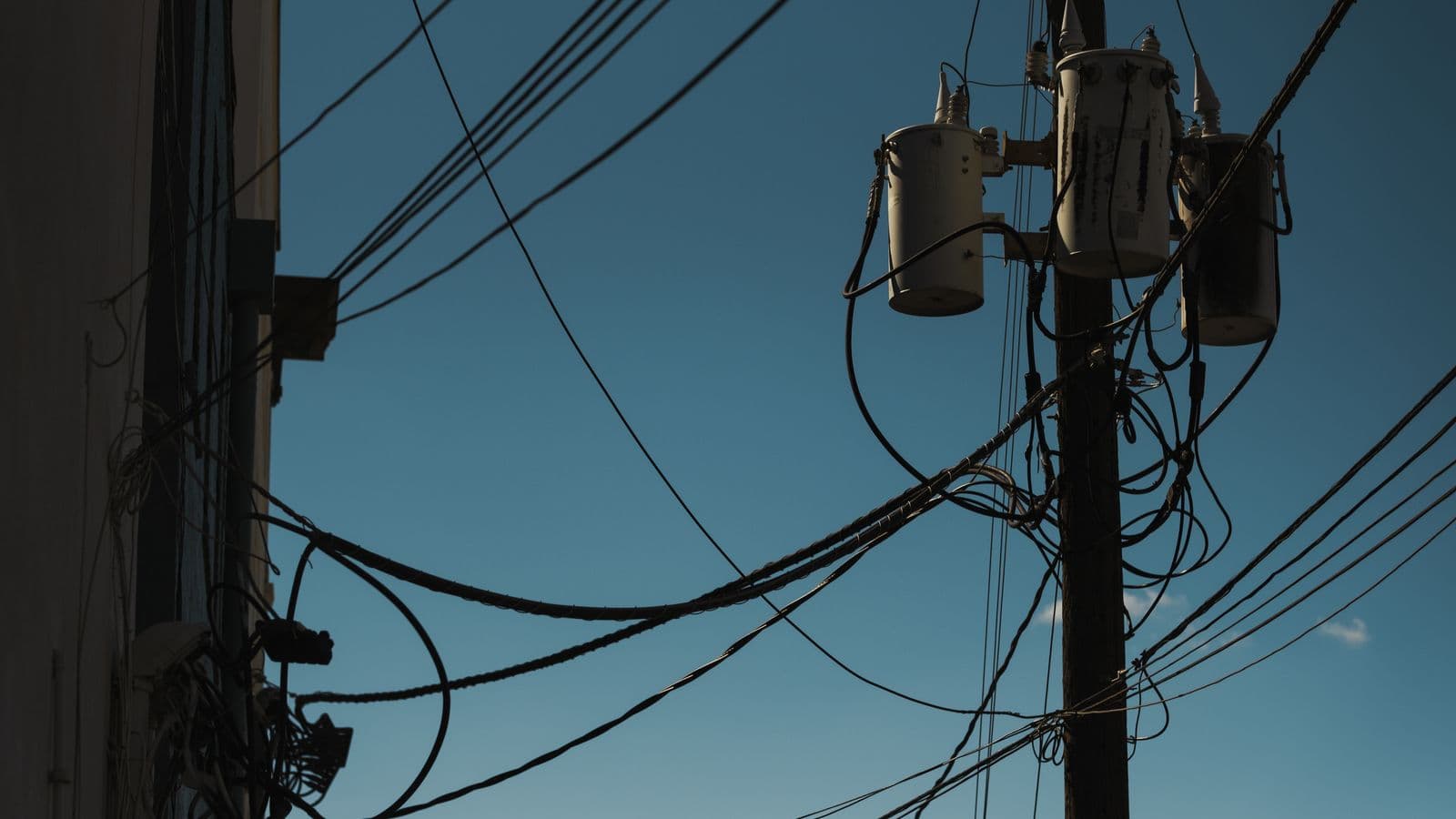
Power transformer selection is one of the most critical and hardest-to-reverse decisions in a substation project, the dry-type vs. oil-immersed question in particular has consequences that go beyond engineering, touching fire regulations, insurance, and building layout directly. Choosing the wrong transformer type comes back to bite the facility either as unexpected added investment during operation (fire suppression system, expanded ventilation) or as unnecessarily high upfront cost. In Bursa's organized industrial zones, dense indoor site layouts and fire regulations often decide this question outright. This article compares the two transformer types on the basis of IEC 60076-1:2011, with concrete decision criteria.
Why Is Power Transformer Selection So Critical?
The power transformer converts the energy a facility draws from the medium-voltage grid down to low voltage, it sits at the heart of the production line. A transformer failure means the entire facility stops, which is why the choice of transformer type must be evaluated holistically, not just on initial cost, but on fire risk, maintenance needs, efficiency, and site conditions. Per IEC 60076-1:2011, a transformer is defined by rated power, vector group, impedance voltage, and cooling class; the difference between dry-type and oil-immersed fundamentally comes down to the insulation and cooling medium.
What Is an Oil-Immersed Transformer?
In oil-immersed transformers, the windings and magnetic core sit inside a sealed tank filled with mineral oil or synthetic ester. The oil provides electrical insulation while also cooling the unit, carrying heat generated in the windings to the tank surface and radiators, a cooling class typically coded ONAN (Oil Natural Air Natural). Oil-immersed units are more common and generally more economical at higher power ratings and for outdoor use; the insulating fluid's high dielectric strength also allows a more compact winding design.
What Is a Dry-Type Transformer?
In dry-type transformers, the windings are cast in resin (epoxy) or insulated in a dried air/gas environment; no flammable liquid is present. Cooling is provided by natural airflow (AN, Air Natural) or fan-assisted forced airflow (AF, Air Forced). Because they contain no flammable insulating liquid, dry-type transformers are especially favored indoors and in areas with high occupant density. Resin-cast windings also provide a certain resistance to environmental factors such as humidity and dust.
Fire Safety Comparison
This is the single most decisive difference between the two transformer types. The mineral oil in oil-immersed transformers is flammable, and in an internal fault, oil temperature can rise rapidly, increasing fire risk, which is why oil-transformer rooms usually require additional measures such as fire walls, an oil containment pit, and an automatic suppression system. Dry-type transformers, lacking any flammable liquid, carry a significantly lower fire load; this is why dry-type is often mandated by code in indoor, multi-story, or high-occupancy buildings (shopping centers, hospitals, office buildings, food production facilities). In Bursa's densely built OIZ plots, where an indoor substation room is planned, this criterion often becomes decisive.
Indoor vs. Outdoor Siting
Oil-immersed transformers can be used both indoors and outdoors given proper site precautions; outdoor use is common in prefabricated (kiosk-type) substations. Dry-type transformers are generally designed for indoor use; if used outdoors, an additional protective enclosure with an upgraded IP rating is required. In facilities with limited land where an indoor substation room is mandatory, dry-type usually offers a more practical solution by cutting the added cost of fire measures. Conversely, on facilities with ample land suited to a kiosk-type substation, oil-immersed remains both more economical and a proven long-service option.
Maintenance Requirements
Oil-immersed transformers require periodic oil analysis, moisture content, dissolved gas content (DGA, Dissolved Gas Analysis), and dielectric strength testing all provide early warning of the transformer's internal health. Oil level checks, leak inspection, and oil filtration when needed are also part of periodic maintenance. Dry-type transformers, having no oil to maintain, involve a comparatively simpler maintenance process, essentially winding insulation resistance measurement, dust/moisture accumulation checks, and functional testing of the fan/ventilation system (for AF units). This difference gives dry-type an edge, especially at small-to-mid-sized facilities with limited maintenance staff.
Efficiency and Losses
Losses in power transformers consist of two components: core loss (no-load loss) and winding loss (load loss). As a general trend, well-designed oil-immersed transformers can show slightly lower total losses than dry-type units at a comparable power rating, thanks to oil's efficient cooling performance; but this difference varies by manufacturer, design class (e.g., energy efficiency class), and load profile. In dry-type units, the air-cooled structure can cause winding temperature to rise faster under high load, which drives the need for fan-forced cooling (AF). Efficiency comparisons should be based on the loss figures in the manufacturer's technical datasheet against the facility's actual load profile, generalizations should not substitute for concrete numbers.
Noise Level
Dry-type transformers, especially with forced-air cooling active, generally produce higher audible noise than oil-immersed units, because the winding and core structure is in direct contact with air. In oil-immersed transformers, the oil medium and tank structure provide a degree of acoustic damping. In noise-sensitive layouts (adjacent office buildings, facilities near residential areas), this difference directly affects substation room placement and acoustic isolation requirements. From an occupational health and safety perspective, substation room noise level should also be factored into workspace planning.
Overload Tolerance and Ambient Temperature
The transient overload capacity above rated power varies with the chosen type and cooling class. In oil-immersed transformers, the oil's thermal mass acts as a buffer that slows temperature rise during short-term overloads, an advantage particularly for production lines with a variable load profile. In dry-type transformers, winding temperature responds more quickly to load changes, so overload tolerance is generally more limited, and in hot climate conditions (enclosed substation rooms with high summer ambient temperatures) additional ventilation or a derating calculation may be needed. In Bursa's OIZ areas where summer ambient temperatures run high, this makes ventilation design an added priority when selecting a dry-type unit.
Typical Use Cases in OIZ Settings
Bursa's organized industrial zones show a typical pattern: food, textile, and other high-occupancy production facilities favor dry-type transformers because of indoor siting and fire regulations; heavy industry, metalworking, and factories on larger plots commonly use oil-immersed transformers together with a kiosk-type substation. In chemical facilities or sites carrying explosive-atmosphere risk, transformer type selection must additionally be evaluated under ATEX and related explosion-protection regulations.
Decision Criteria Summary
When choosing a transformer type, weigh the following criteria in order:
- Siting requirement: Indoor or outdoor? If indoor, dry-type is usually the priority option.
- Fire regulations and insurance conditions: Local fire authority and insurer requirements effectively dictate transformer type for some facility categories.
- Power requirement and growth plan: Oil-immersed generally stays more economical at higher power ratings.
- Maintenance capacity: If there's no maintenance organization capable of regular oil analysis, dry-type reduces the operational burden.
- Noise sensitivity: This criterion becomes prominent near residential areas or adjacent offices.
- Budget: Initial investment cost varies by power level but generally favors oil-immersed.
These criteria should be weighed through an engineering assessment specific to the facility's conditions, and the final decision made on total operating cost, not price comparison alone.
Connection to the Substation Project
Transformer type selection must be handled together with the overall substation project, room dimensions, ventilation design, fire precautions, and switchgear layout are all shaped by the transformer type. We walk through this end-to-end process step by step in our substation installation guide; the transformer type decision should be finalized at the earliest stage of the project, because changing it later requires significant revision to construction and mechanical infrastructure.
Common Mistakes
- Choosing oil-immersed based on price alone: For an indoor installation, this can later force added investment in fire precautions.
- Using a dry-type transformer outdoors without extra protection: Without an appropriate IP rating, moisture and dust gradually weaken winding insulation.
- Leaving oil analysis out of the periodic maintenance plan: An insulation degradation that could be caught early turns into a transformer failure if detected late.
- Ignoring the noise criterion: Adding acoustic isolation after the fact, near an office or residential area, costs far more than choosing the right transformer and room location from the start.
FAQ
Is a dry-type transformer more expensive than oil-immersed? Generally yes, especially at higher power ratings the upfront cost is higher. But once the fire precautions required for indoor siting are factored into oil-immersed, the total cost gap can narrow.
Does a dry-type transformer have a shorter service life than oil-immersed? No, when correctly sized and operated under suitable ambient conditions (moisture and dust control), dry-type transformers achieve a service life comparable to oil-immersed units.
Can an oil-immersed transformer never be used indoors? It can, but it requires additional measures such as a fire wall, oil containment pit, and automatic suppression system, measures that add both cost and required room size.
Does transformer type affect distribution utility approval? The utility doesn't directly dictate transformer type, but clearance distances, safety margins, and earthing requirements can differ by type, so this detail should be clarified during project approval.
Do dry-type transformers always need a fan for cooling? No, at low and medium power ratings, natural air cooling (AN) can be sufficient; fan-forced cooling (AF) is used under high load or limited ventilation conditions.
Which type requires less maintenance? Dry-type transformers carry a lighter day-to-day maintenance load since they require no oil analysis or oil servicing.
Are synthetic ester-filled transformers safer than mineral oil ones? Synthetic ester has a higher flash point and therefore carries somewhat lower fire risk than mineral oil, but it is still a flammable liquid and does not offer risk as low as dry-type.
How does IP rating affect the transformer type decision? A dry-type transformer used outdoors or in a dusty/humid room needs an enclosure with an upgraded IP rating, adding to the base unit cost. Oil-immersed units' tank structure inherently provides a degree of environmental protection.
If capacity is increased later, is a type change required? No, but room size, ventilation, and, for oil-immersed, oil volume need to be recalculated for the new capacity. Keeping the existing transformer type is usually the most economical path, as long as site conditions can accommodate the new load.
Who should make the transformer type decision? An EMO-registered electrical engineer who weighs power rating, siting, fire regulations, and budget together, on the basis of IEC 60076-1:2011, can make the correct determination.
Conclusion
The choice between dry-type and oil-immersed transformers has no single "better" answer, it's an engineering decision shaped by the facility's siting, fire-risk profile, budget, and maintenance capacity. The right call should be made at the very start of the substation project, weighing all of these criteria together. SOREAS manages selection, procurement, and installation for both transformer types across Bursa's organized industrial zones under our MV switchgear and transformer systems service.
Let's talk through this together
The SOREAS engineering team can assess what's covered here for your specific facility. Reach out via the contact form or call us directly.