
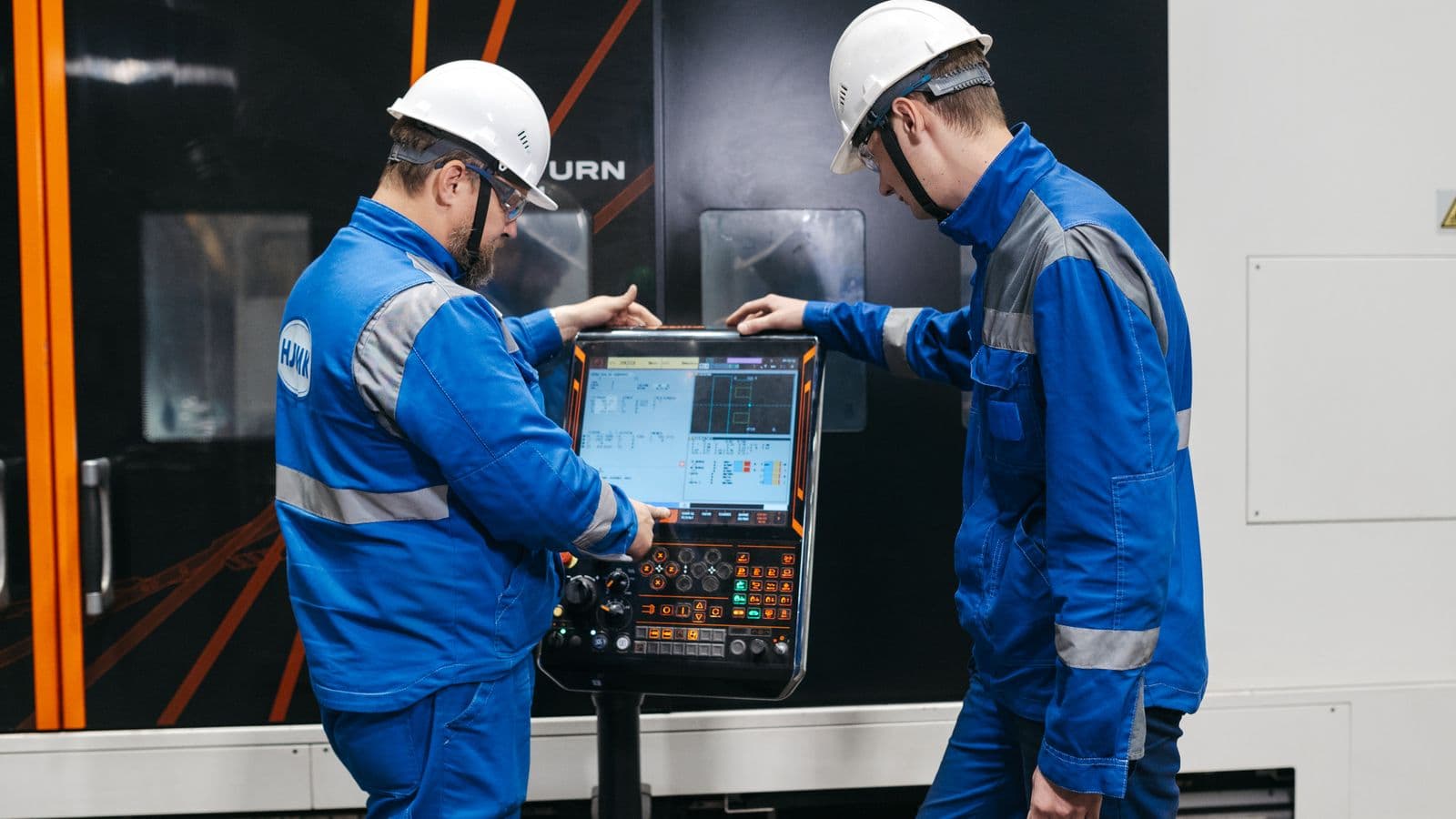
When a new machine arrives on site, connecting the power is not the same thing as making it safe and reliable to run. A rushed commissioning leaves risks that stay invisible for the first few weeks but can turn into a fault, or a fire, within months. A machine with an undersized feeder, a protection device left on factory defaults, or missing labels goes into production looking like it "works", right up until the first fault. This guide covers the complete electrical side of new-machine commissioning, the steps most often skipped, and why they lead directly to early failures.
Before Commissioning: Reviewing the Project and Documentation
Before any physical connection work starts, review the manufacturer's electrical schematic, power requirement (kW, current, power factor) and recommended protection-device specifications. This review catches mismatches, such as the machine's expected voltage tolerance or neutral requirement, before they surface during field wiring. The existing load on the panel the machine will connect to also needs checking: adding a new load means confirming in advance that it won't push the panel past its total capacity.
Feeder Sizing Verification
The new machine's feeder must be sized per TS HD 60364-5-52, accounting for current-carrying capacity, voltage drop and installation method. Points to verify:
- Rated current vs. inrush current: In machines with large motors especially, starting current can be far higher than running current; cable and protection-device selection must account for this transient.
- Voltage drop: On long cable runs, a cable sized correctly for current can still exceed the voltage-drop limit (typically 3-5%), which shows up as the motor underperforming.
- Installation-method correction factors: Cables grouped together in a tray carry less current than a single cable laid alone; sizing without this correction leads to sustained overheating.
- Capacity check when feeding from an existing panel: The new feeder's load, added to what's already there, must not exceed the main breaker's and incoming cable's rated capacity.
Insulation Resistance and Continuity Testing
Before power is applied, every feeder's insulation resistance must be measured with a megger. This is the only way to catch cable damage, moisture ingress, or a wiring error introduced during installation, before energizing. Continuity testing then confirms phase-neutral-earth connections are correct and the circuit is continuous. Skip these two tests and energize directly, and a hidden insulation fault can trip the breaker on first power-up, or, worse, cause electric shock or fire.
Earth Continuity and Protective Bonding
The connection between the machine frame and the facility's earthing system must be low-resistance and continuous. This cannot be verified by eye, it needs a continuity measurement to confirm numerically. In machines with metal frames or those operating in damp or conductive environments especially, a gap in earth continuity can let dangerous voltage build up on the frame. We cover earthing system condition and resistance in more depth in our earthing measurement guide.
Verifying Protection Device Settings
The new machine's protection device, breaker, motor protection relay, overcurrent relay, should be set to the machine's actual current and starting characteristics, not left on factory defaults. Settings to check:
- Overcurrent threshold: Set against the motor's rated current; too low and it trips unnecessarily on normal starts, too high and it responds too slowly to a real overload.
- Short-circuit breaking capacity: The device's breaking capacity (Icu/Icn) must exceed the calculated short-circuit current at that point in the panel.
- Selectivity: The new feeder's protection device must coordinate with the upstream main breaker, a fault should trip only the nearest device, not needlessly take out the upstream breaker feeding the whole panel.
- Thermal relay delay: Set to match the motor's starting duration; otherwise the relay can trip falsely during a normal start.
Getting these settings right depends on the facility's short-circuit calculation being current, we cover that in detail in our short-circuit calculation guide.
Labeling and Documentation
One of the most frequently skipped but operationally critical parts of commissioning is labeling. Every feeder needs permanent, legible labels at its panel exit point and at the machine's incoming terminal. Without labeling, finding the right breaker during a future fault can take minutes, a delay that matters in an emergency. The commissioning file should also include: an updated single-line diagram, insulation and continuity test results, protection setting values, and the earthing measurement report. This file is kept as the reference document for maintenance and troubleshooting for the life of the machine.
Staged Energization and Functional Testing
When power is first applied, the approach should be staged rather than running the whole system at full load immediately:
- No-load energization: The machine is first run unloaded to check motor rotation direction, basic functions and alarm systems.
- Low-load testing: The machine is loaded gradually while current, voltage and temperature are monitored.
- Full-load testing: The machine runs at rated load to confirm current values stay within the calculated range.
- Sustained observation: The machine runs under observation for a set period (typically a few hours) to catch overheating, vibration or abnormal noise.
This staged approach makes it much easier to isolate the source of a problem if one appears, going straight to full load raises the risk of damage to both the machine and the panel if something is wrong.
Assessing the Power-Factor Correction Impact
High-power motor-driven machines can negatively affect a facility's overall power factor. Before a new machine is commissioned, check whether the existing power-factor correction system can absorb this added load. Machines with variable-frequency drives (VFDs) in particular generate harmonics; for these, check whether the correction system needs a filter reactor per IEC 60831 / IEC 61642. Skip this assessment and reactive-penalty risk can rise once the machine is running, or existing correction capacitors can fail early from harmonic stress.
Operator Handover and Training
Once electrical testing is complete, handing the machine over to operations is not finished by saying "it works, go ahead." The operator needs to know: the location of emergency stops, how to distinguish normal operating sounds/indicators from abnormal ones, and which breaker to shut off in a fault. This handover should be documented in a written record stating clearly which tests were run and what values were measured. A verbal handover leaves no defensible record of responsibility.
Overlooked Details Behind Early Failures
The most common, and hardest to spot, gaps in commissioning:
- No torque check on cable connection points: Loose connections heat up over time, carbonize at the contact point, and eventually fail.
- Cable/gasket selection unsuited to vibration or ambient conditions: Wrong IP rating or inadequate mechanical strength leads to premature wear within months.
- Unused/spare panel entries left open: Blank cable entries left open to dust or moisture ingress cause insulation problems over time.
- Fuse/breaker selection without correcting for inrush current: Causes frequent nuisance trips during normal operation, which pushes operators to see the protection system as "the problem" and disable it, the most dangerous outcome of all.
Common Mistakes
- Commissioning with factory-default protection settings: A protection device not tuned to the machine's real current characteristics either trips unnecessarily or responds too slowly to a real fault.
- Skipping insulation testing and energizing directly: Loses the chance to catch hidden damage from installation.
- Skipping staged load testing and going straight to full load: Makes it harder to isolate a problem and raises the risk of damage.
- Leaving labeling and documentation for later, or skipping it entirely: Significantly extends fault-finding time down the road.
- Not assessing the power-factor correction impact: Can lead to early capacitor failure from harmonics, especially with VFD-driven machines.
- Handing over to the operator without written documentation: Leaves a gap in both responsibility and knowledge transfer.
FAQ
How long does electrical commissioning for a new machine typically take? Anywhere from a few hours to a few days depending on the machine's power and complexity; the staged testing process and observation period are the main drivers of that time.
How often should insulation resistance testing be repeated? Always at initial commissioning; after that, as part of a periodic maintenance program, typically annually, or more often depending on the facility's operating conditions.
Does every new machine added to an existing panel require a fresh short-circuit calculation? If the panel's total load or grid connection conditions haven't changed significantly, the existing calculation usually still holds; adding a high-power machine warrants a review.
Why does staged energization matter so much? Going straight to full load reduces the chance of catching a wiring or setting error before it damages the machine or the panel.
What happens if the thermal relay setting is wrong? Set too low, it trips unnecessarily on normal starts and disrupts production; set too high, it fails to protect the motor during a real overload.
Do VFD-driven machines need any extra checks? Yes, because they generate harmonics, the correction system's tolerance for those harmonics, and whether a filter reactor is needed, should be assessed separately.
Is operator training part of the electrical checklist? Yes, no matter how thorough the technical tests are, an operator who doesn't know emergency-stop procedures or fault indicators leaves a serious gap in operational safety.
Why does the commissioning file need to be kept? It serves as the reference for maintenance, troubleshooting and any future audit over the machine's life; losing it can mean redoing the same tests from scratch.
Conclusion
New-machine commissioning isn't finished when the power connection is made, it's finished when the tests are verified and the handover is documented. Getting every step right, from feeder sizing through protection coordination, labeling and operator training, prevents most of the failures that would otherwise surface within the machine's first year. SOREAS runs new-machine and production-line commissioning across Bursa's OIZs with an EMO-registered engineering team, fully aligned with this checklist.
Let's talk through this together
The SOREAS engineering team can assess what's covered here for your specific facility. Reach out via the contact form or call us directly.