
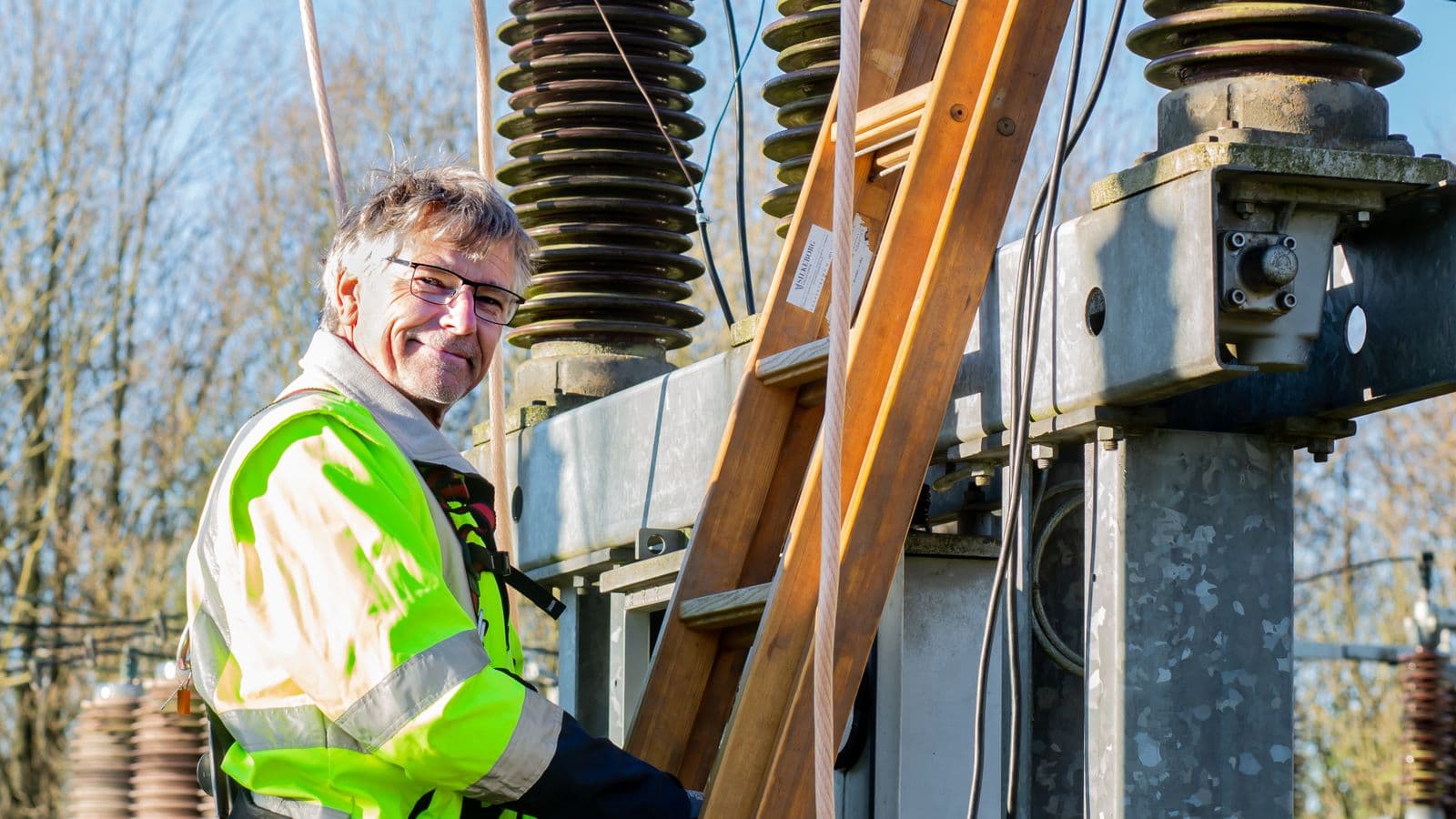
A substation isn't a "build it once and forget it" investment, without regular maintenance, equipment wears down silently, and a fault typically surfaces at the worst possible moment, when production is running at full speed. Periodic maintenance is not just about preventing faults; it's also a core component of the YGIS (High-Voltage Operating Responsibility) obligation and audit compliance. The periodic maintenance program our field teams run across Bursa's organized industrial zones is built on a defined checklist and measurement discipline. This article covers what a substation maintenance visit involves, the recommended frequency, and how this process connects to the YGIS obligation.
Why Is Periodic Maintenance So Critical?
Most substation equipment, the transformer, MV switchgear, protection relays, earthing system, is designed to run uninterrupted for years, but that doesn't mean it's maintenance-free. Insulation materials age over time, connection points loosen, protection settings can become invalid after a facility change, and earthing resistance shifts with soil conditions. The purpose of periodic maintenance is to catch these gradual deteriorations through measurement before they become a fault, and to schedule corrective action rather than react to a breakdown. This approach catches most of the seven fault types we detail in our most common transformer faults article before they escalate into a serious problem.
1. Thermal Imaging (Thermal Camera Scanning)
A thermal camera scan images the temperature distribution, under load, across every connection point, breaker contact surface, bushing and cable terminal in the substation. A hotter-than-normal spot is usually the early sign of a loose connection, an overloaded feeder, or a contact surface beginning to degrade. To give a meaningful result, the scan must be performed while the facility is under full load, a scan done at low load can miss a problem that hasn't yet become apparent. Results are compared against previous scans to evaluate whether a temperature-rise trend exists.
2. Oil Analysis (For Oil-Immersed Transformers)
For oil-immersed transformers, periodic oil analysis is the most reliable source of early warning about the unit's internal health. The analysis covers:
- Dielectric strength test, measures the oil's insulating quality
- Moisture content, indicates moisture ingress and the condition of the breather/gaskets
- DGA (Dissolved Gas Analysis), detects gases produced by overheating or partial discharge in the windings and insulation
- Acid number and color, indicate the oil's degree of aging and oxidation
The value of these test results lies not just in the current snapshot but in the trend over time, measurements repeated at regular intervals, rather than a single reading, reveal the rate of deterioration.
3. Insulation Resistance Testing
Insulation resistance measurement confirms that the transformer windings, MV switchgear components, and cable insulation still provide adequate electrical insulation. The measurement is taken with a megohmmeter, and results are evaluated both as an absolute value and for time-dependent behavior (polarization index). Low insulation resistance can result from moisture ingress, contamination, or aging insulation material, and it is often the precursor to a more serious fault at the next stage. This test is a standard part of periodic maintenance for both the transformer and MV switchgear components.
4. Protection Relay Function Tests
Protection relays are critical safety devices that must open the circuit in the correct sequence and within the correct time during an actual fault. Periodic function testing confirms:
- Relay settings are aligned with the current protection coordination study
- Trip times remain within factory tolerances
- Relay-to-breaker communication and the trip circuit are functioning correctly
- Firmware is up to date and alarm history has been reviewed
Whenever a facility experiences a load increase, new equipment addition, or topology change, the protection coordination study must be reviewed and updated, otherwise relay settings can become mismatched with the new short-circuit conditions.
5. Earthing Checks
The earthing system is the foundation of both personnel safety and correct protection device operation. During periodic maintenance, earthing resistance is measured using the three- or four-electrode fall-of-potential method, and continuity between panel/equipment enclosures and the earthing bar is verified. Ground resistance isn't a fixed value, seasonal moisture changes, electrode corrosion, and on-site excavation/construction changes all affect it over time. We cover this topic in more depth in our earthing measurement guide.
6. Cleaning and Connection Tightness Checks
Dust, moisture, and industrial contamination accumulating in substation rooms can cause problems over time on both insulating surfaces and connection points. This part of periodic maintenance includes:
- Cleaning MV switchgear interior surfaces and insulators
- Checking torque values at busbar and cable connection points (a loose connection is the most frequently detected finding in thermal scans)
- Checking/cleaning ventilation openings and filters
- Reviewing room sealing against rodent/pest entry
A loose connection develops rising contact resistance over time, causing local heating and eventually failure at the connection point, which is why torque checking, while it looks simple, is a maintenance item with outsized impact.
7. Breaker and Disconnector Mechanical Checks
The mechanical open/close function of breakers and load-break switches in MV switchgear should be periodically verified alongside electrical tests. For withdrawable breakers, this confirms the draw-in/draw-out mechanism operates smoothly and that earthing switches follow the correct interlock sequence. This check guarantees the breaker will operate reliably both in normal operation and when emergency response is required.
Recommended Maintenance Frequency
Maintenance frequency varies with the facility's risk profile, equipment age, and load profile, but the generally accepted approach is:
- Thermal camera scan: 1-2 times a year, preferably under full load
- Oil analysis (oil-immersed): annually for critical transformers, every 6 months for aging or heavily loaded units
- Insulation resistance and earthing measurement: annually, more often if regulation requires
- Protection relay function test: annually and after every significant facility change
- General cleaning and connection check: 1-2 times a year, more often in dusty/heavy-industry environments
These frequencies are a starting point; the final program should be set through engineering assessment based on the facility's risk class and its maintenance/fault history.
Who Should Perform the Maintenance?
Every measurement and intervention on medium-voltage equipment carries serious electrical and occupational-safety risk, which is why periodic maintenance must be carried out by a team of EMO-registered electrical engineers with insulated equipment, calibrated measurement instruments, and competence working on MV systems. A measurement taken with an out-of-calibration instrument is not just technically wrong, it's also invalid for audit purposes. Likewise, intervention by personnel unfamiliar with earthing and interlock procedures in MV switchgear jeopardizes both measurement reliability and site safety. Experience with manufacturer-specific equipment (a particular breaker or relay brand) also matters, since it affects how correctly test results are interpreted.
Preparing Before the Maintenance Visit
An effective maintenance visit begins before anyone arrives on site. Previous maintenance reports and measurement trends are reviewed, the facility's current single-line diagram and protection coordination study are checked, which circuits need to be de-energized is planned in advance and coordinated with the production team, and the necessary spare parts and measurement equipment (thermal camera, megohmmeter, oil sampling kit, relay test set) are prepared ahead of time. This preparation shortens the on-site visit and keeps production disruption to a minimum, an unplanned or unprepared maintenance visit both takes longer and risks skipping some checklist items.
Maintenance Reporting and Record-Keeping
Every maintenance visit should conclude with a written report covering the measurement results, findings, and recommended corrective actions. These reports don't just document the current state, by revealing trends over time (a gradual rise in oil moisture, a shift in earthing resistance), they make it possible to anticipate future faults. During audits and OIZ/utility inspections, regular, signed maintenance records are the core document proving facility compliance, missing or inconsistent records are flagged as a non-conformity.
Common Mistakes
- Running maintenance only after a visible problem appears: The purpose of periodic maintenance is early detection before any visible symptom exists; a reactive approach defeats that purpose.
- Running a thermal scan at low load: Overheating issues mostly appear under full load; a low-load scan gives a misleading result.
- Not updating protection relay settings after a facility change: New equipment or a load increase can invalidate the existing protection coordination.
- Keeping irregular or incomplete maintenance records: The most common non-conformity found in audits and insurance processes.
FAQ
How long does periodic maintenance take? It varies with the facility's size and the number of switchgear bays/transformers; a small facility can be completed in a day, while a large OIZ factory can take several days.
Should production be stopped during maintenance? Most measurements (thermal scanning, oil sampling) can be performed while the system is energized; but insulation resistance testing and some relay tests require briefly de-energizing the relevant circuit. Planned maintenance coordinates these interruptions with the production schedule to minimize impact.
What happens if we skip periodic maintenance? Fault risk increases, and it creates a non-conformity under the YGIS obligation, bringing both audit penalties and the risk of an insurance claim being refused after an accident.
Who should sign the maintenance report? The maintenance report must be signed by an EMO-registered, authorized electrical engineer; an unsigned or unauthorized record has no standing in an audit.
When should the first maintenance be performed on a newly installed substation? Commissioning tests already serve as a kind of first comprehensive check; the next periodic maintenance should be scheduled per the generally accepted frequency (usually within the first year).
Should the maintenance program be facility-specific? Yes. Because load profile, equipment age, ambient conditions (dust, moisture, temperature) and fault history vary by facility, maintenance frequency and scope should be set through engineering assessment rather than a generic template.
What happens if a problem is found during maintenance? Depending on the severity of the finding, either a corrective action is performed on the same visit (e.g., tightening a connection) or a separate scheduled intervention is recommended; urgent findings require immediate action.
Does SOREAS offer periodic maintenance separately from the YGIS service? Periodic maintenance is an inseparable part of our YGIS service; we also offer standalone periodic maintenance to facilities that don't have a YGIS assignment with us.
Conclusion
Periodic substation maintenance, from thermal imaging to oil analysis, insulation testing to earthing checks, is a set of complementary measurements aimed at catching gradually developing problems before they become a fault. This program is also the concrete expression of the YGIS obligation and forms the basis of audit compliance. SOREAS, with our EMO-registered engineering team across Bursa's 17 organized industrial zones, turns this entire checklist into a structured maintenance program under our MV switchgear and transformer systems service.
Let's talk through this together
The SOREAS engineering team can assess what's covered here for your specific facility. Reach out via the contact form or call us directly.