
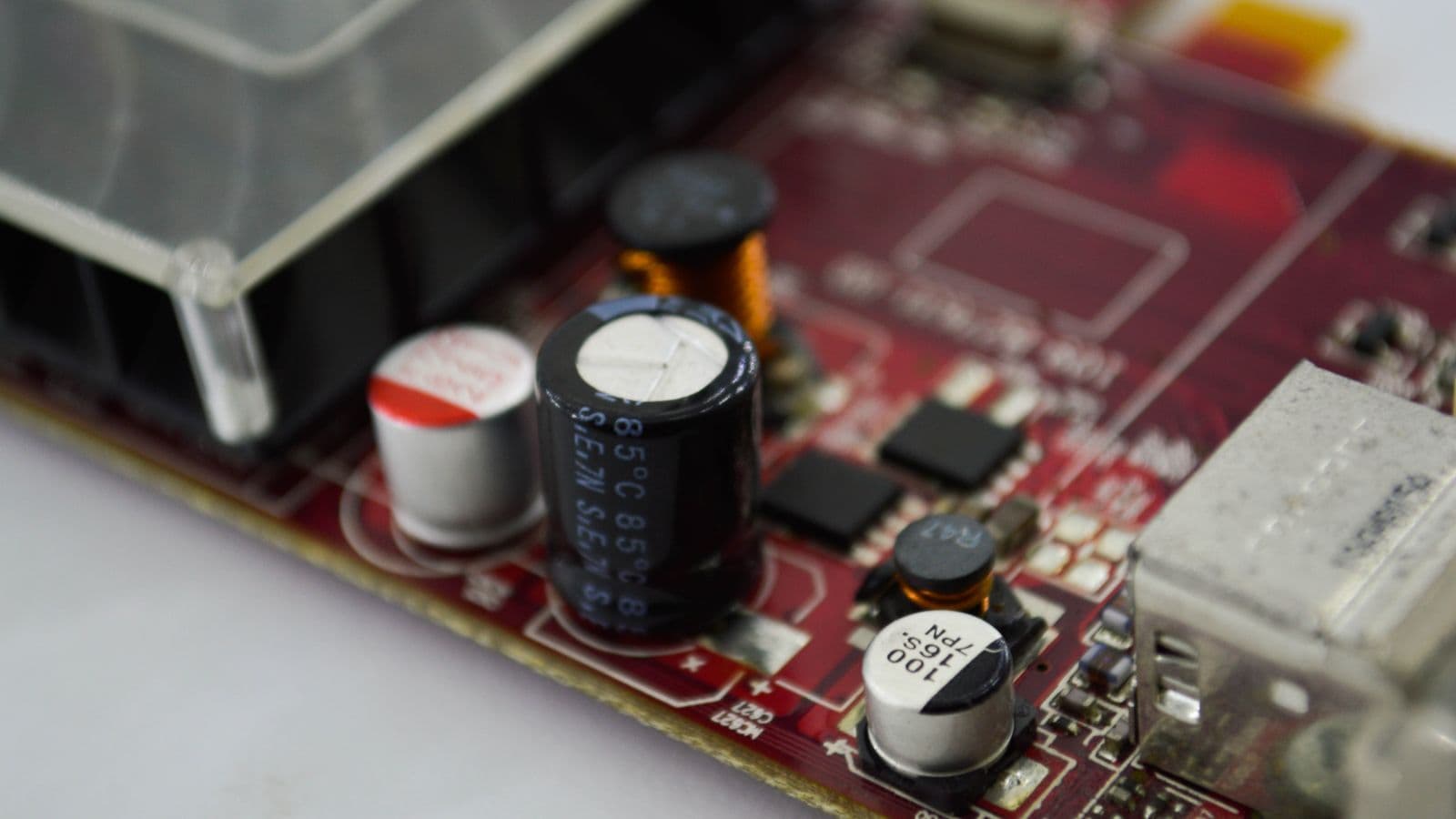
Compensation capacitors aren't install-and-forget equipment. Even a correctly sized, quality capacitor loses capacitance over time under heat, harmonics, and voltage swings, and that loss can bring the reactive penalty back without anyone noticing until the bill arrives. Capacitor failure is rarely sudden; it's usually the end point of months of slow capacitance decay, and that decay can be caught early with regular measurement. This article covers what shortens capacitor life, how to build a periodic maintenance routine, and the warning signs that precede failure.
What Shortens Capacitor Life
A compensation capacitor's rated life (typically around 100,000 hours per the manufacturer) only holds under laboratory conditions. In the field, four factors do most of the damage:
- Excessive heat: A capacitor's internal dielectric material degrades chemically faster as temperature rises. As a rule of thumb, every 10°C increase in operating temperature roughly halves the capacitor's expected life.
- Harmonic currents: Harmonic distortion pushes current through the capacitor above its rated value, adding extra heating and dielectric fatigue. We cover this topic separately in detail.
- Overvoltage: If grid voltage consistently exceeds the capacitor's rated voltage, often due to over-compensation during low-load hours, electrical stress on the dielectric increases and life shortens.
- Poor ventilation: Internal panel temperature can rise independently of ambient temperature when fans clog, filters get dirty, or the panel is packed too densely; this directly compounds the heat problem above.
These four factors usually act together: harmonic current raises heat, and that heat combined with inadequate ventilation can push a capacitor to fail well below its expected life.
What Happens Inside the Capacitor
The vast majority of modern compensation capacitors use dry-type, self-healing polypropylene film technology. When a local weak point on the film breaks down, the thin metal coating vaporizes at that spot and isolates the short automatically, giving the capacitor some tolerance for small local failures. But every self-healing event slightly reduces the film's effective capacitance area. Higher heat, harmonic current, or overvoltage increase how often these self-healing events occur, which shows up over time as measurable capacitance loss. In other words, capacitor "aging" is usually not sudden, it's a cumulative, measurable process, which is exactly why regular measurement belongs at the center of maintenance.
How Temperature Affects Capacitor Life
Most capacitor manufacturers rate their products for a specific ambient temperature range (commonly -25°C to +55°C, depending on the temperature category) and a specific annual average temperature. If internal panel temperature runs near the top of that range, the capacitor starts losing capacitance well before the manufacturer's rated life. This is why panel placement matters: capacitors need adequate distance from the hottest components (contactors, fuses, reactors), and the panel itself should sit somewhere without direct sun exposure and with adequate air circulation.
A Periodic Maintenance Routine
An effective compensation maintenance program includes these checks at regular intervals, generally at least once a year, or every six months in facilities with elevated harmonic levels:
- Capacitance measurement: Each stage's actual capacitance is measured and compared against its rated value. Capacitance loss is the most direct indicator of internal degradation; a commonly accepted threshold is replacing a stage once loss exceeds 5-10% of rated capacitance.
- Thermal checks: A thermal camera scans all connections, contactors, and capacitor bodies in the panel; abnormal hot spots point to a loose connection or an overloaded stage.
- Connection tightness checks: A loose connection generates extra resistance and heat, and can eventually cause arcing. Busbar and cable connection points are checked against torque specifications and re-tightened where needed.
- Relay function tests: Verifying the relay switches stages in the correct sequence and timing, and that the C/k ratio is still set correctly.
- Visual inspection: Checking capacitor bodies for bulging, leakage, or discoloration, all physical signs of rising internal pressure.
- Harmonic measurement: Re-measuring THD-I and THD-V levels, checking whether the harmonic profile has changed if new equipment was added to the facility.
Early Signs of Capacitor Failure
Before a capacitor fails completely, these signs usually appear first:
- Capacitance loss: A measured value below rated capacitance is the earliest and most reliable indicator.
- Case bulging: Most modern capacitors have a pressure-relief diaphragm for safety; a slightly bulging case signals rising internal pressure and an imminent failure.
- Repeated fuse blowing: If a particular stage's fuse keeps blowing, that stage's capacitor is likely experiencing a partial failure.
- Abnormal sound: Changes in the humming or crackling noise from a capacitor can indicate internal structural degradation.
- Constant relay switching: If the target power factor can't be held and the relay keeps switching stages, one or more stages may have lost capacity.
Catching any of these signs and measuring without delay prevents both damage to other panel components (contactors, busbars, fuses) and an unplanned production stoppage from a sudden failure.
Proactive Maintenance vs. Reactive Replacement: The Cost Comparison
Capacitor failure tends to happen at the worst possible moment, and a sudden failure brings more than just the replacement cost. It typically adds an emergency service call, unplanned production downtime (the reactive penalty returns if the compensation panel goes offline), and sometimes damage to neighboring components (contactors, busbars, fuses) from the failed capacitor. By contrast, a capacitance loss caught early through periodic maintenance can be resolved in a planned maintenance window, with a single stage replacement, without stopping production. Maintenance cost is almost always lower than the avoided unplanned downtime and neighboring-component damage, a well-established principle in industrial maintenance engineering, and one that applies fully to compensation panels, since a penalty can return quickly once compensation drops offline.
What to Watch for When Replacing a Capacitor
Replacing a failed stage isn't as simple as installing any capacitor with a matching kVAr rating. The replacement needs to:
- Match the panel's original voltage class and comply with IEC 60831
- Be compatible with the detuned reactor's tuning factor, if the facility has one
- Match the stage's contactor and fuse sizing
If switching to a different brand or series, internal resistance and loss characteristics should be verified as compatible with the original design; otherwise the new stage can cause unbalanced current sharing with the other stages in the panel.
Discharge Resistors and Switching Safety
Every capacitor stage should be fitted with a discharge resistor that brings residual voltage down to a safe level within a specified time after the stage is switched off. A faulty or incorrectly rated discharge resistor can allow a stage to be re-energized while residual voltage is still present, causing both a current spike at the contactor contacts and additional dielectric stress on the capacitor. Verifying the discharge resistor is functional, that voltage drops within the standard-specified time after a stage is de-energized, is a commonly skipped but important maintenance step.
Why Maintenance Records Matter
Logging capacitance readings, thermal images, and relay test results at every maintenance visit makes the capacitance-loss trend visible over time. If a stage loses capacitance progressively across three consecutive maintenance visits, it's likely to fail before the next one and can be proactively scheduled for replacement. Maintenance without records only shows the current state, without trend analysis, early warning signals get missed.
The SOREAS Compensation Maintenance Program
Our periodic maintenance program, run by our EMO-registered engineers across OSB facilities in Bursa, covers:
- Capacitance and thermal measurement: Each stage measured individually, with a thermal camera scan.
- Relay and C/k verification: Relay function and the C/k ratio checked and re-verified.
- Harmonic re-measurement: Checking whether the harmonic profile has shifted due to facility changes.
- Reporting: Results reported against previous visits, identifying at-risk stages.
- Planned replacement: Stages exceeding the capacitance-loss threshold are replaced on a schedule that avoids disrupting production.
For more on how compensation systems work, see our reactive penalty article, and for our maintenance and installation services, visit the power factor correction service page.
Common Mistakes
- Only doing maintenance after failure: Letting capacitors run until they fail leads to unplanned downtime that costs far more than scheduled maintenance.
- Relying on visual inspection instead of capacitance measurement: Capacitance loss can already be significant before case bulging becomes visible; visual checks alone are inadequate.
- Neglecting ventilation: Skipping cleaning of panel fans and filters can cause premature failure even in a correctly sized system.
- Random cross-brand replacement: Swapping in a stage with unverified characteristics can unbalance current across the panel.
- Not keeping maintenance records: Maintenance without trend tracking misses the acceleration pattern in capacitance loss.
FAQ
How often should compensation maintenance be done? As a general rule, at least once a year; every six months for facilities with high harmonic levels or demanding operating conditions.
How do we know a capacitor has lost capacity? If the measured capacitance is noticeably below rated value, generally more than a 5-10% loss, the stage is at risk and should be scheduled for replacement soon.
Is slight bulging in a capacitor case dangerous? Yes, it's a physical sign of rising internal pressure and can indicate the safety diaphragm is about to activate. This stage should be replaced as soon as possible.
Does the panel need to be shut down during maintenance? Capacitance measurement and visual inspection usually require a brief shutdown; thermal scanning can typically be done while the panel is energized.
How much does maintenance cost compare to reactive replacement after failure? The exact ratio varies by facility, but a planned stage replacement usually involves only the capacitor cost, while an unplanned failure adds emergency service, production downtime, and sometimes damage to neighboring components.
Is the rated life printed on a capacitor accurate in the field? Only under the manufacturer's specified ambient temperature and load conditions. With high harmonics, overvoltage, or poor ventilation, actual life can fall noticeably short of that figure.
Should relay settings be checked during maintenance too? Yes. Even when stages are physically sound, the C/k ratio can drift out of correct calibration over time (due to CT changes or panel revisions), preventing the system from holding its target power factor.
Is it better to fully replace an old compensation panel or maintain it piece by piece? If most stages are still close to rated capacitance and the relay/contactors are current, targeted component replacement is usually more economical. If most stages have lost significant capacity and the relay is an older generation, a redesign offers a more durable long-term solution.
Capacitor life isn't a fixed number, it's an outcome shaped jointly by heat, harmonics, voltage, and maintenance quality. A regular, record-based maintenance routine prevents unplanned downtime and ensures a compensation investment actually delivers its expected service life.
Let's talk through this together
The SOREAS engineering team can assess what's covered here for your specific facility. Reach out via the contact form or call us directly.